Humanity faces challenges unlike any in the past. We have to create a resilient civilization that can withstand environmental degradation and an increasingly hostile climate. We are doing out mite. We are creating tools and knowledge essential for adapting to a rapidly changing environment.
Tool building for increasing variation in plants
To adapt to the rapidly changing climate, we need to create novel varieties of crops and wild plants. Although targeted gene editing will undoubtedly play a key role, it cannot be applied in every use case. Consequently, random mutagenesis remains an important tool in plant improvement and research. While single nucleotide mutations can be induced using chemicals in a lab setting, creating structural variations requires access to a radiation source. These sources may be difficult to access for many plant breeders. In collaboration with my former mentor Mary Gehring’s lab, we demonstrate that the cheap, widely available anti-cancer drug etoposide can induce structural variation. You can read about it at https://www.biorxiv.org/content/10.1101/2024.12.20.629831v1 .
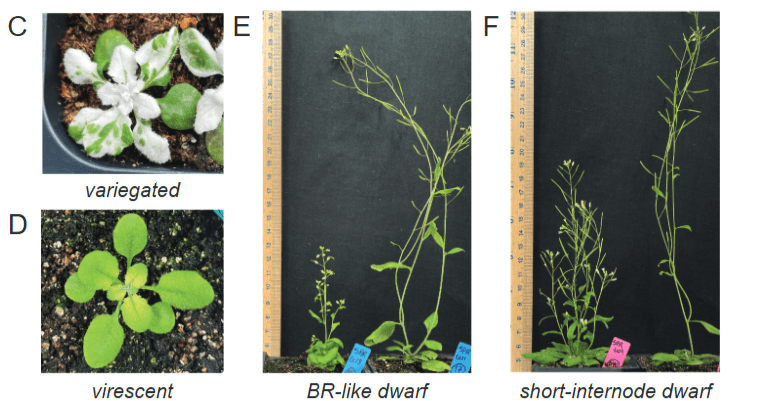
You can see a small sample of visible mutant phenotypes that we generated:
Studying the impacts of persistent chemicals on living organisms
We and the Treanor Lab at UTSC are spearheading a multi-lab, inter-disciplinary effort to study the impacts of long-lived pollutants on animals, plants, and microbes. Our partners in this effort include the Anreiter, Mott, Simpson, Bell, Beaudoin, and Hui labs at the University of Toronto.
 satyaki-lab.com